Warning: Creating default object from empty value in /var/www/100pctfremmed.dk/public_html/wp-content/themes/oshin/ReduxFramework/ReduxCore/inc/class.redux_filesystem.php on line 29 Portfolios Arkiv - Page 10 of 15 - 100% Fremmed?
I borrowed as much sheet music as I was allowed to and copied them all, because I feared that it was an awesome dream I might wake up from.
I don’t feel foreign at all in Denmark. Of course I have had some bad experiences with Danish people, but I have also had bad experiences with other nationalities. It is not really about Denmark or Danes but about the individual person.
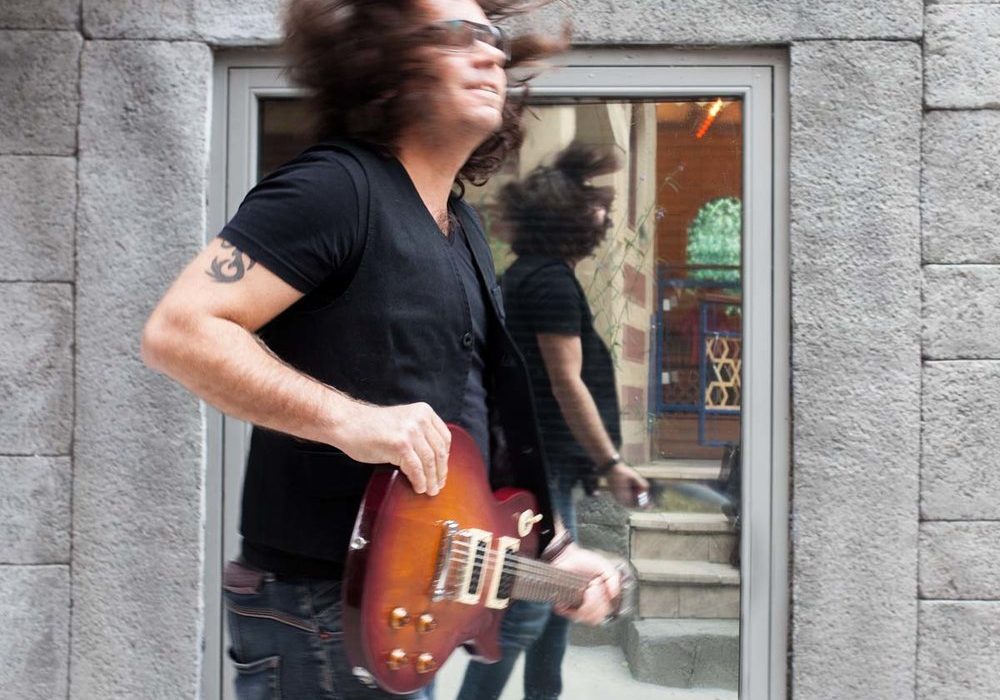
I need the freedom to be myself. I want to listen to the music I like, and I want to look like I want to. I refuse to restrain myself just because I stand out from the crowd. Here in Copenhagen, I do feel at home.
I have dyed my hair and I also have tattoos. A lot of people think I have distanced myself from the Iraqi culture, but for me it is an expression of my
newfound freedom.
I am a metal freak, and I also play in a metal band. My music means everything to me. When I lived in Iraq, I spent years and a small fortune on buying the kind of music I like. But it was well worth it. I
feel completely happy when I am playing music. I will never forget the first time I visited the music library in Odense. I had only just arrived in Denmark, but I thought I had arrived in heaven. I borrowed as much sheet music as I was allowed to and copied them all, because I feared that it was an awesome dream I might wake up from. I just couldn’t understand that it was real.
Music has also helped me make friends here in Denmark. Just when I arrived I had a neighbour who didn’t speak English, and I couldn’t speak Danish, so we communicated through music, and we would often sit and jam together.
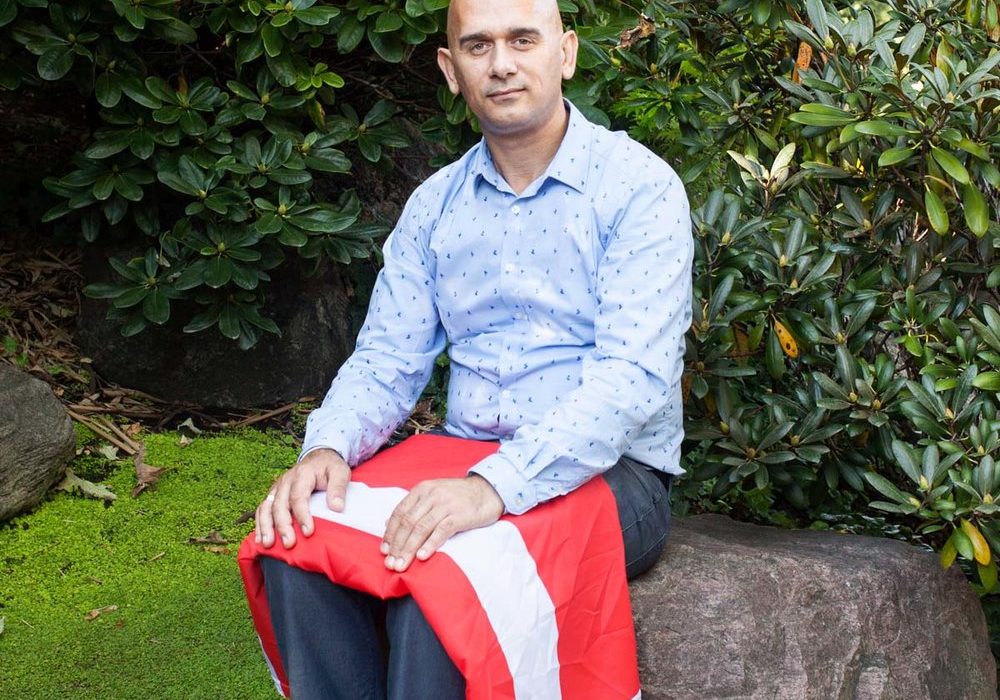
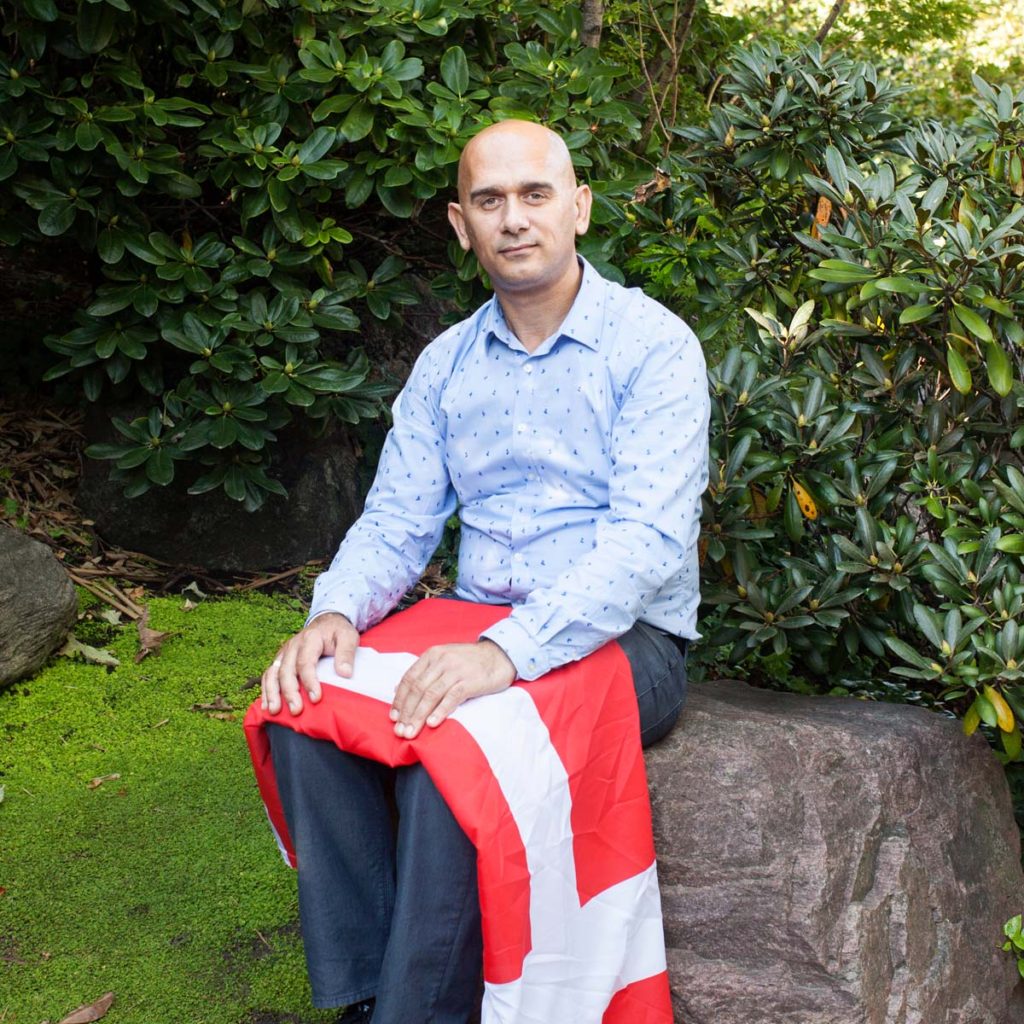
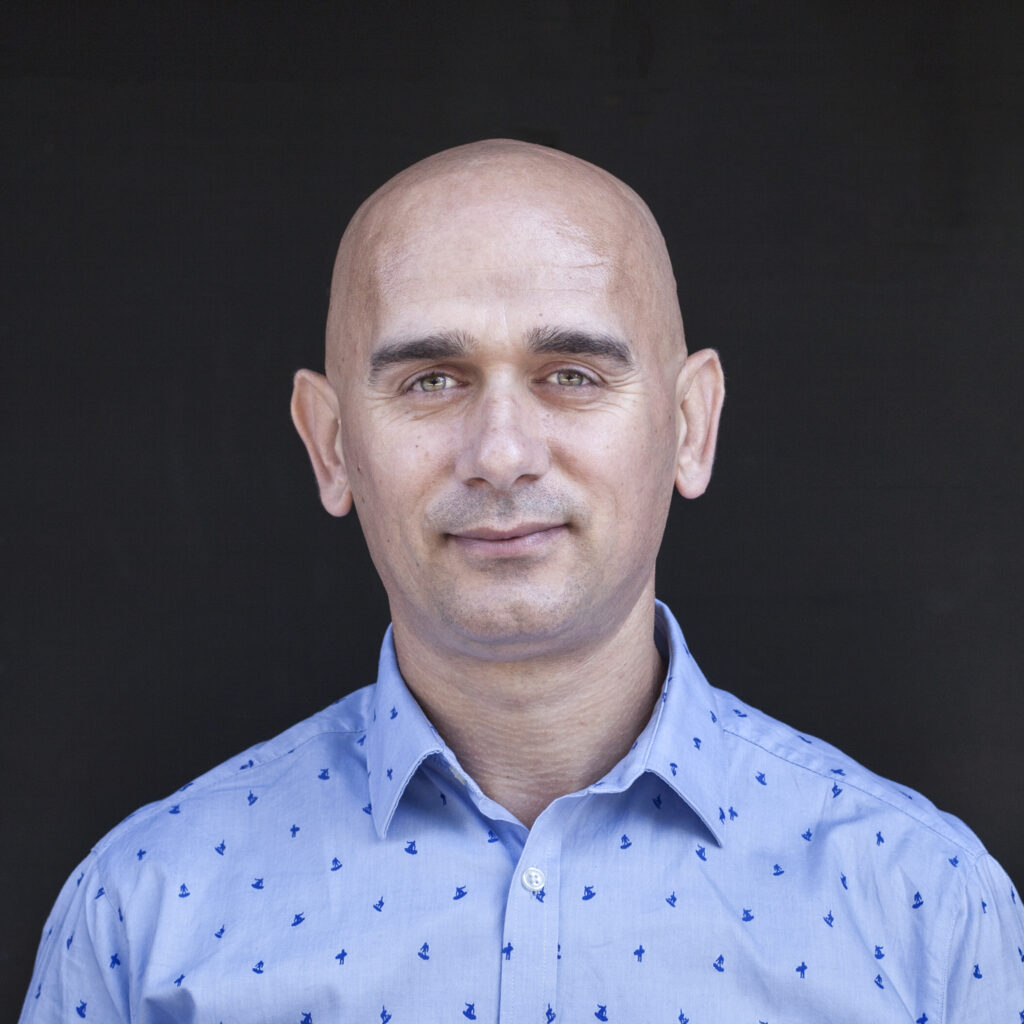
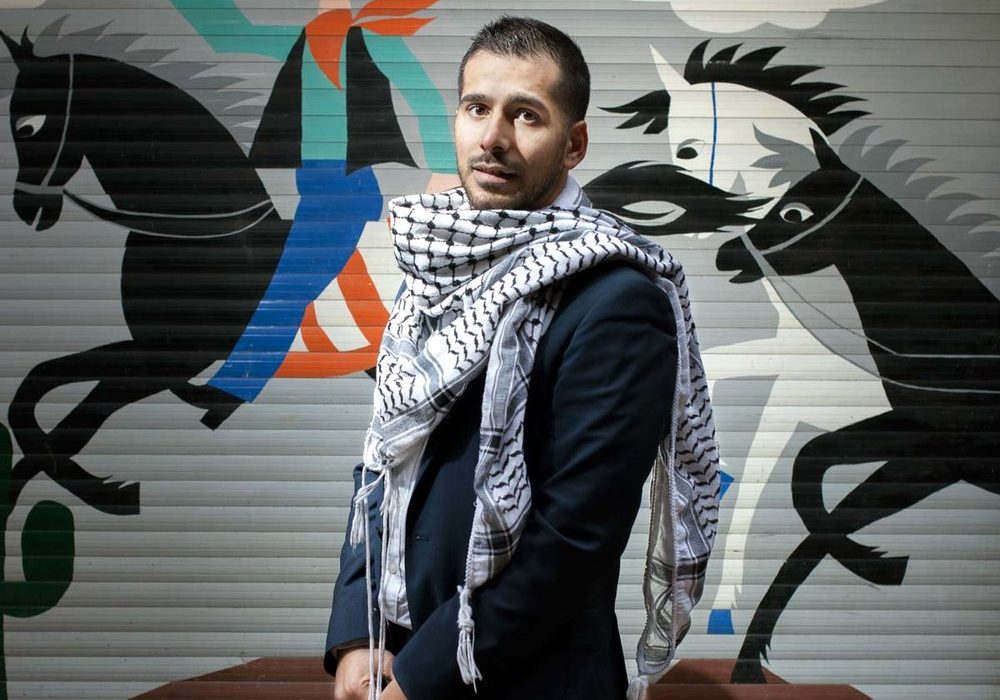
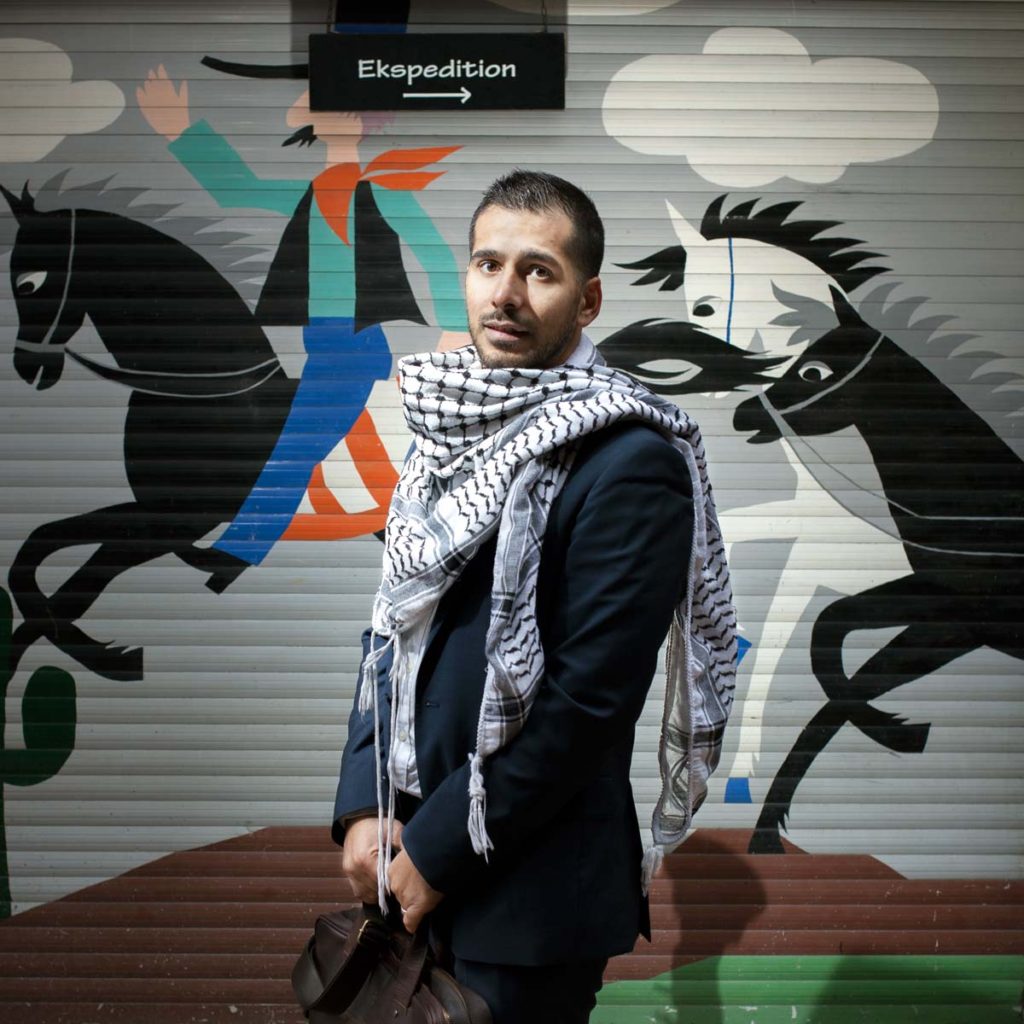
Allan Alansari / male / in a relationship / children / educated petroleum engineer from Iraq and a masters degree from ITU /self-employed web
designer / Copenhagen NV / from Iraq / came to Denmark in 1999 / residence permit in 2000
most people seem to have a close-knit network, where new friends are often perceived as a sort of invasion.
I ceased being a refugee when I started school and began to work. I have only ever fled once. But I am 100% foreign. Even if I had been born in Denmark I still wouldn’t be Danish. To be a Dane you have
to look like a Dane, and I just don’t. Most people assume that I come from a small village and that I am not used to modern life, but I come from Damascus, a city with 1,7 million inhabitants. So I haven’t had any difficulties with integrating, and I know I can manage on my own.
After two years in Denmark I got a 12 in Danish at the VUC course.When I left the asylum centre I decided to move to Copenhagen. Three hours after arrival at Copenhagen Central Station I had a job
and three days later my own room.
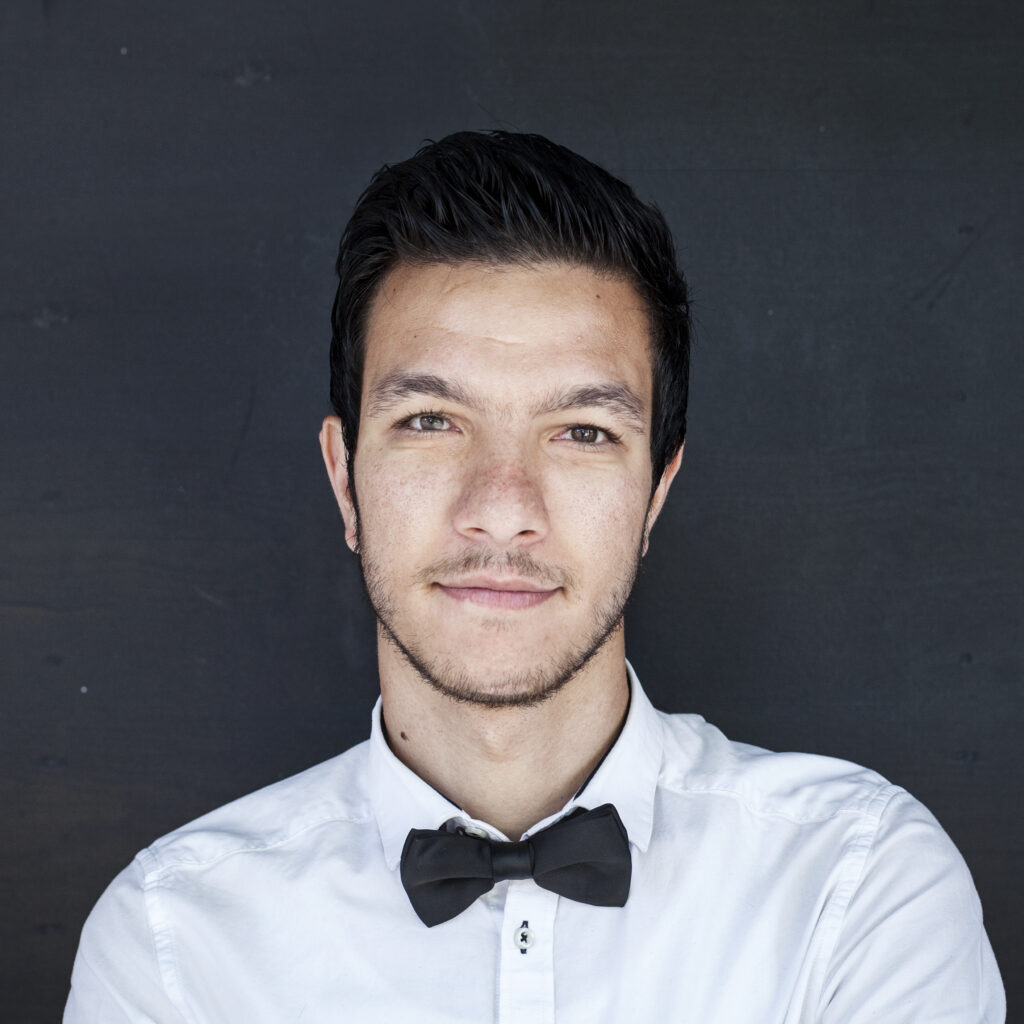
Most of my family is still in Syria. I fled with my mother, but at the station in Malmö we became separated and I ended up going to Copenhagen while she stayed in Sweden. I miss my family awfully.
In Syria I spent all my time with them or with my friends. I feel a huge void. It has been difficult getting friends here in Copenhagen. Most of my friends are also Syrian refugees and a few from Venligboerne refugee network. But I am young and I like to go out and party. It is not that I don’t meet people when I go out, but it never seems to go
beyond being Facebook friends.
Building a new network as a 26-year old is difficult, inasmuch as most people seem to have a close-knit network, where new friends are often perceived
as a sort of invasion.
Amer Biro / 26 years / male / single / student / Copenhagen NV / from Syria / came to Denmark in 2014 / residence permit same year
Someone had given me a chance. It wasn’t Allah and it wasn’t Jesus. It was the University Hospital. It was the Danish welfare society.
I don’t feel foreign. Discussions about integration are often inconsistent, because what are you supposed to be integrated into, and what does it mean to be Danish? I have experienced one Denmark in the Jutland countryside and another Denmark in Copenhagen. Just like Denmark, Danishness is a diverse and complex mass.
When I was 15 I saw my dad being beaten up by a group of Serbian soldiers, and I decided to go to war. The following years I lived with war very close by and with an awareness that life could end any
time. After having been shot in my arm, the doctor who examined me diagnosed me with cancer with only a month to live, but it didn’t touch me. I had become used to the notion of death, and life had no longer any value. I thought about returning and spending the rest of my life fighting. But at the same time I tried to try find treatment abroad,
and I finally ended up in Denmark. Two years later a doctor at the University Hospital in Copenhagen announced that I had recovered and I took another decision.
I would give something in return. Someone had given me a chance. It wasn’t Allah and it wasn’t Jesus. It was the University Hospital. It was the
Danish welfare society. I will rather pay high taxes than being able to afford a fancy car, because I believe in the community, the Danish model, and the welfare society. Unfortunately society seems to develop in a direction with less solidarity, and the most vulnerable are blamed for all the problems
in our society.
Dzevad Ramić / 40 years / male / in a relationship / children / union secretary / Copenhagen S / from Bosnia-Hercegovina / came to Denmark in 1994 / residence permit in 1997
I consider myself a feminist, and I was on maternity leave for six months with my son.
10 years ago I would probably have said that I was zero percent foreign, but today I think I approach 30%. The political climate has changed, xenophobia has become legit, and I see some chilling parallels to the time just before WWII and the wars in Bosnia and Lebanon.
I do not think we will learn from past mistakes. My grandparents emigrated from Palestine and my parents from Lebanon. We came to Denmark by chance, and in our minds we are still refugees, so should the development in Denmark escalate, we are mentally prepared.
I hope that we in ten years’ time have finished talking about refugees and immigrants all the time, so that we can start talking about the real issues. I would like to talk about how we ensure the survival
of the welfare state, and how we ensure a generally well-educated population with a wide horizon and the ability to look beyond their own interests. My high school time has influenced me. It may sound
a bit hippie-like, but I did learn something fundamental about humanrights and various ways of looking at the world, and it made me think
of how we can get people to find strength in diversity.
I consider myself a feminist, and I was on maternity leave for six months with my son. The first few months offer you a chance to get a unique relationship with your child, so I think some of the
time should be earmarked for men.
Some will claim it is not the man’s job to look after children, but man has evolved, and we no longer live like we did a century ago.
Mohamad Ibrahim / 31 years / in a relationship / children / strategic partner / Brøndby Strand / born in a refugee camp in Lebanon / Palestinian
background / came to Denmark via family reunification in 1990
The insecurity which came along with the flight and the separation still marks us today, even though the whole family is together and our future in Denmark is safe.
Basically I feel at home in Denmark, but it does affect me when I feel I am being labelled as a foreigner. Last year when I saw all the refugees on the motorways in Denmark, something happened inside of me. It took me back in time. I became aware that I have a refugee voice, and I decided to use it.
It was during one of the worst snowstorms in 20 years that my parents, seven siblings and myself fled Afghanistan. My mother and father carried the little ones. Sometimes we had to dig ourselves into the ground to keep warm. We crossed rivers, we had to be quiet all the time. The human smugglers wanted to give my little sister some pills because she cried, and if people were slow, they threw their things away. In Poland we got separated, and it wasn’t until 18 months later that we got back together again. This is now 15 years ago, but
it still influences us all.
By leaving our homeland, we toyed with our destiny. The insecurity which came along with the flight and the separation still marks us today, even
though the whole family is together and our future in Denmark is safe.
So I see it as my duty to speak on behalf of the ones who do not have the strength. Like when I see a documentary about a 16-yearold strong and well-integrated girl whose life is slowly falling apart
because she still doesn’t know, after six years in Denmark, if she and her family will be returned to Afghanistan. I have to interfere. I have to speak out against a system which breaks down people and turns children into adults far too soon, because I know how devastating it can be.
Manila Ghafuri / 23 years / female / single / Danish student at the University / Vanløse / from Afghanistan / came to Denmark in 2001 / residence permit in 2003
Even if you are a Muslim girl, wearing a headscarf, I will still offer you a cigarette or a beer, because why should other people’s prejudices deprive you of your choice?
My attitudes are not foreign, and neither is the way I live my life. But even though I think and dream in Danish, I will never become 100% Danish.
I had lived with my father for three days when he hit me for the first time. Before we came to Denmark, my brother and I had only lived with our mother, so my father was a complete stranger to me. My life was controlled and I had no freedom.
Throughout my childhood I have been thrown between my father, my mother, and various shelters, but I never really fitted in anywhere. I couldn’t live up to my father’s expectations of a good Muslim daughter; I am not a mummy’s girl
who behaves properly and correct; and because of my appearance I am not a real Dane either. I am still looking for my place in society, not just for myself but for all the others too. The people who know me, know that I like to provoke people and push their boundaries.
It is important to give space to each other, and we can only do that if we drop all our prejudices. Even if you are a Muslim girl, wearing a headscarf, I
will still offer you a cigarette or a beer, because why should other people’s prejudices deprive you of your choice?
You should not be judged by your religion, sexuality, ethnicity or your appearance for that matter. People should not be subject to control,
whether it be from their family or from society. That is why I don’t think I will ever become 100% Danish. Because if I do not want to change myself for my family’s sake, why should I do it for Denmark?
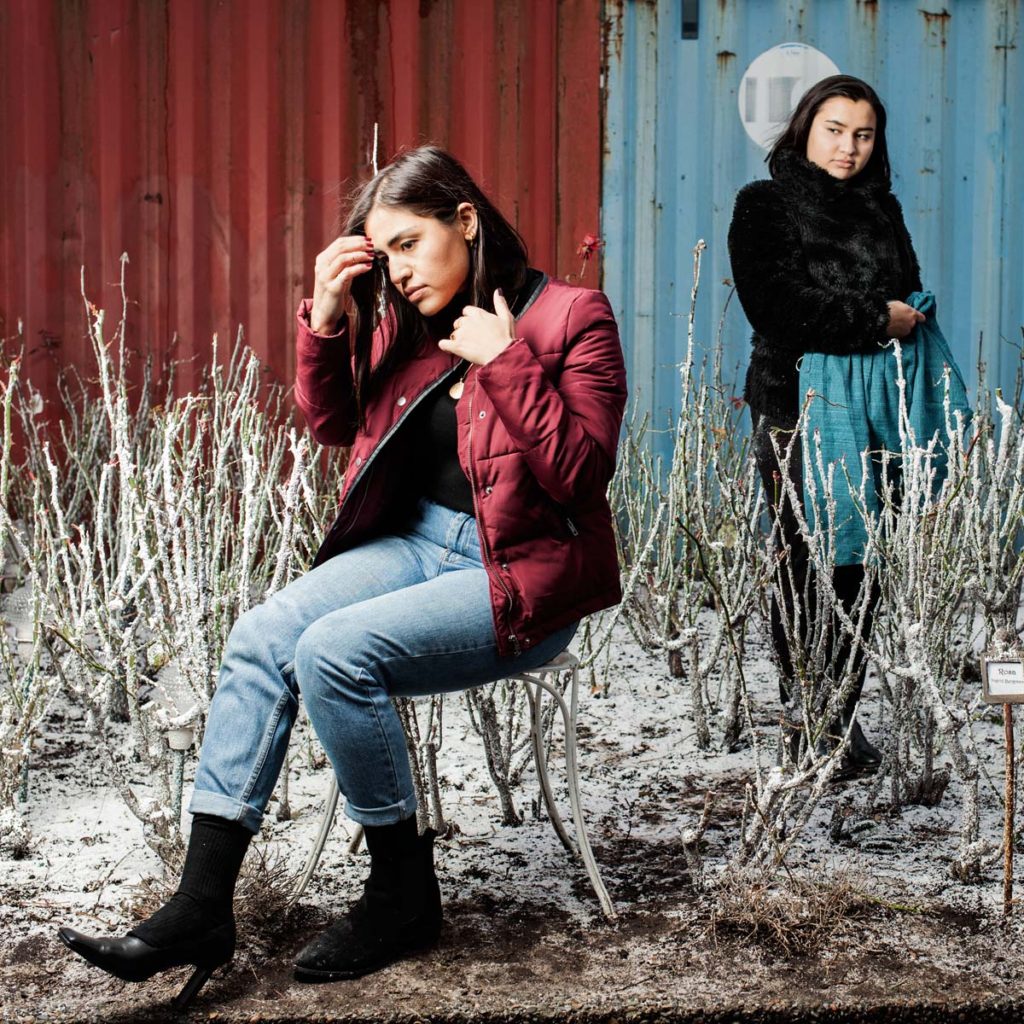
25 years / female / single / HF student / Copenhagen S / from Afghanistan / came to Denmark in 2001 / residence permit same
year
Tove Ditlevsen writes about leaving her husband. She doesn’t do it for her own sake, but for her children and for the sake of her yet unwritten works.
Foreignness is all about how you feel emotionally. I believe in myself and my values, and I do not feel foreign. I arrived in Kastrup with my son in one hand and a suitcase in the other. My husband, who had arrived the year before, waited for me. We were in a new country and we only had each other. We had a second son. I started at the School of Dentistry, and we moved from Odense to Copenhagen, but then things started to happen. At first he began destroying things, and then he started hitting me. Back in Iran external circumstances had forced us apart, but now it was something inside which threatened to split our family apart. It was ourselves. I am a family oriented person, but I had to ask myself: how important is the nuclear family? Should I try and hold it all together until the children were old enough to move away, or should I show my children that mum is strong and that it is ok to say enough is enough? When I finally left, I lost contact with my brothers.
In her memoirs, Tove Ditlevsen writes about leaving her husband. She doesn’t do it for her own sake, but for her children and for the sake of her yet
unwritten works. I mirror myself in her choice and the fight she fought.
It is a fight of the kind that gives meaning to life and that gives you the strength to believe in the future and to forgive what happened in the past. I have translated the book into Persian, because I believe that 70 million people in Iran should have the opportunity to get to know Tove Ditlevsen.
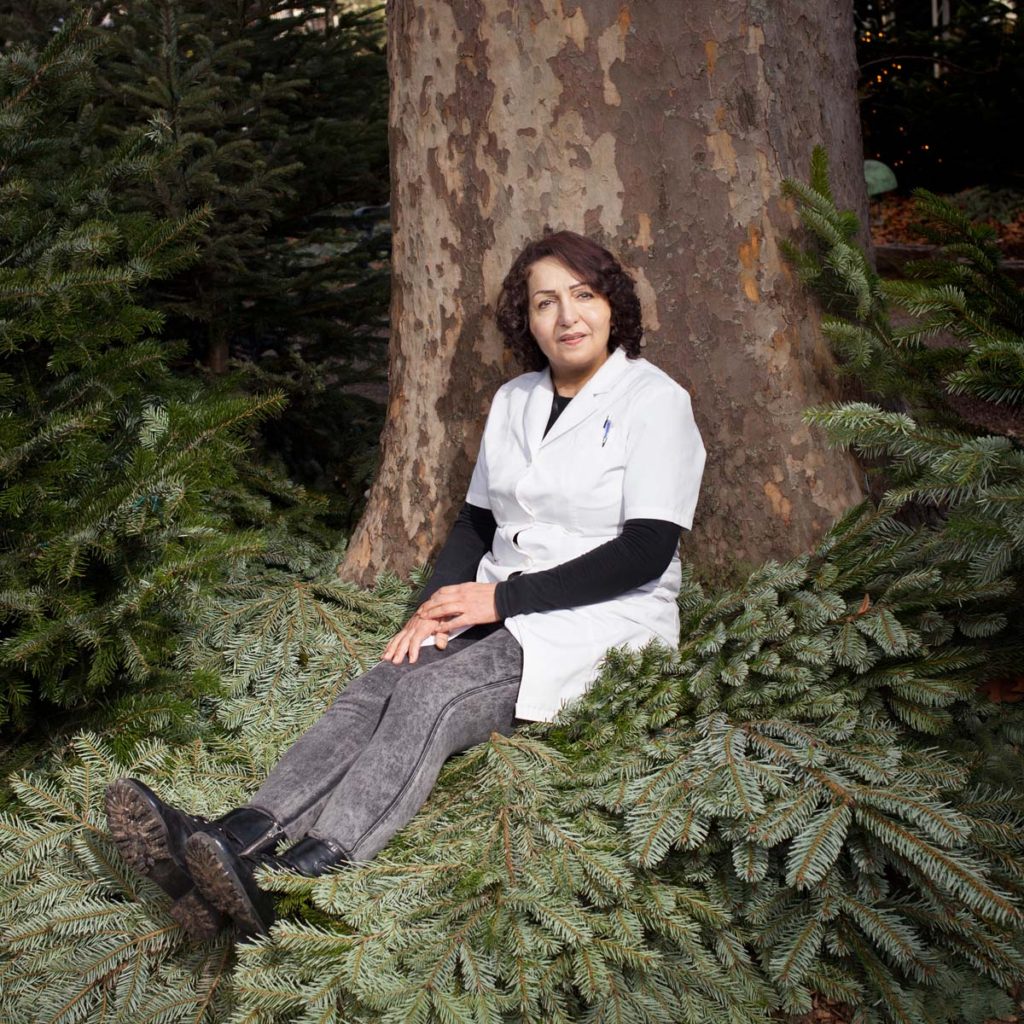
Farideh Fahimi / 53 years / female / in a relationship / children / studies dentistry / Herlev / from Iran / came to Denmark via family reunification in 1991
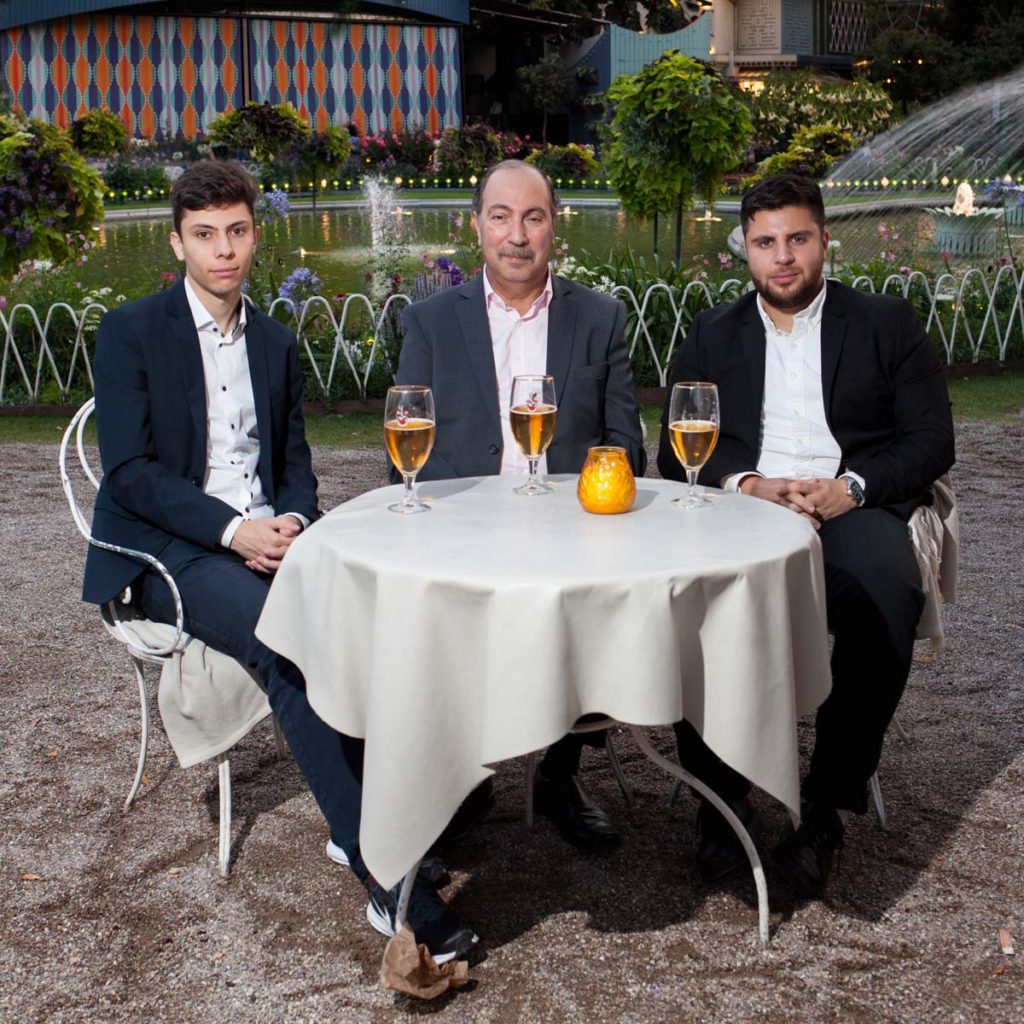
Today we have about 150 mosques across the country, and despite everyone knowing this is where fanaticism begins, we do nothing about it.
I’m Danish with Iraqi background. I have always fought for democracy; in Iraq where I fought against the Saddam regime, or in Denmark through my participation in various associations. I work as disseminator of culture, and have even had the honour of founding and running a community centre in Kokkedal. I enjoy a beer, eat frankfurters, and I have gone through a divorce. Three things that go to prove I am well-integrated. I am certain that I will never move back to Iraq.
Even though my papers say I’m Muslim, I’m not a religious man. How can I believe in a generous God after having experienced so much injustice? My mother said “there’s Islam in Denmark but not in Iraq, Iran or Saudi Arabia”. Everybody has a place to live here, it’s free to go to school and to the doctor, and the state supports those who don’t have a job.
We live in a humanitarian country with democracy, and we must cherish that. Today we have about 150 mosques across the country, and despite everyone
knowing this is where fanaticism begins, we do nothing about it. I’m afraid of what will happen with the society if the politicians do not take this threat seriously.
Everybody has the right to believe in what they want, those who want to wear a scarf, should be allowed to, they should not be discriminated
against, but they should not be treated special either.
Hikmat Hussein / 60 years / male / single / children / health and cultural mediator /
Copenhagen S / from Iraq / came to Denmark in 1992 / residence permit same year
As I already lived in exile, returning home is not even an option and it has no meaning.
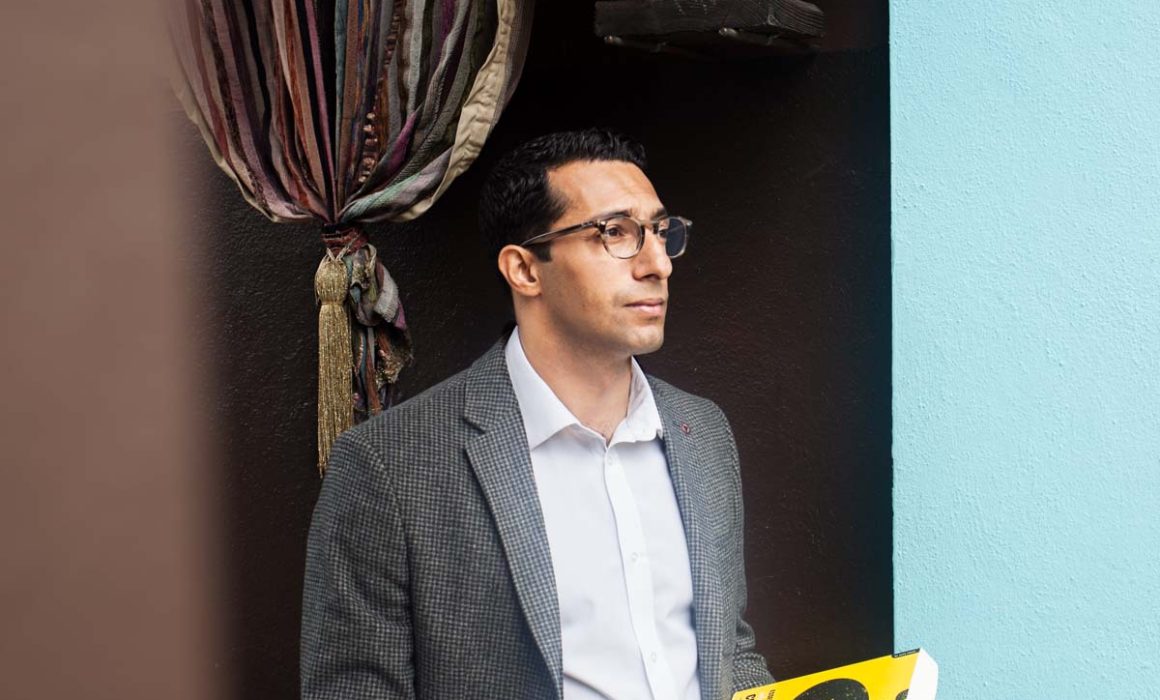
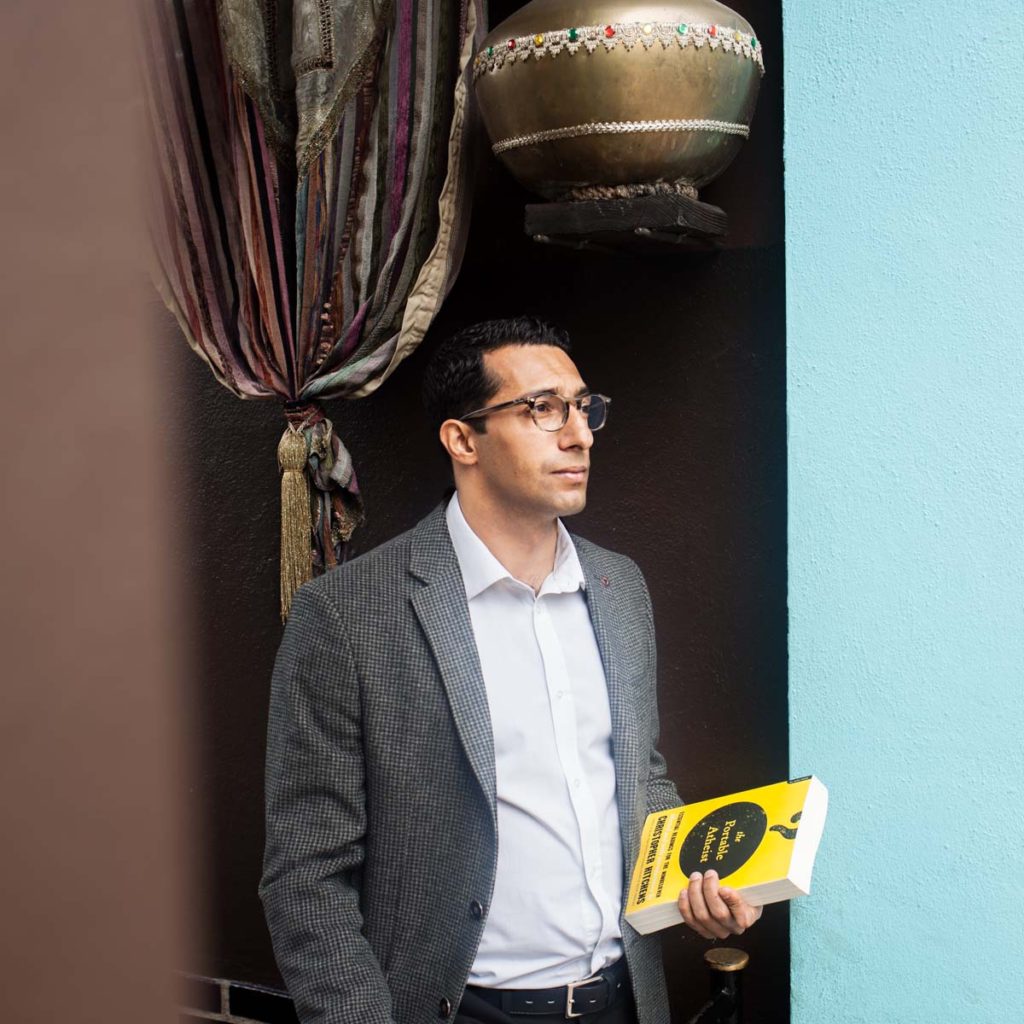
I actually felt more foreign in Syria than I do here. In Syria I was rejected not only by the government but also by the Kurds and the opposition. The Kurds hated me because I did not engage sufficiently in the Kurdish cause. The opposition hated me because I did not believe that Syria’s problems could be solved simply by replacing the
government. And the government hated me because I was constantly critical of it. As I already lived in exile, returning home is not even an
option and it has no meaning. Home is not necessarily where you are born, but where you feel free. Through my literature, I have created
a mental space, which is my home, and which I can enter regardless of where in the world I am.
I worked as a journalist in Syria, but I was expelled from university because of my political activities. I spent 107 days in a prison in Damascus, where my fingers were repeatedly broken during interrogation. Those days became the turning point of my life, and I made a pact with myself that nobody would ever use their power to control me again. I am interested in subjects like Islamophobia, Orientalism and Occidentalism. I want to understand these times in the light of history, and I intend to work artistically and scientifically to change the Western view of the Orient and vice versa.
When Nietzsche declared that God was dead, people started talking about things they had never previously talked about. In the same way I aim to inspire a new debate and create a dialogue which can change established world views. I write to put words to the things people are afraid to talk about.
Jan Pêt Khorto / 30 years / male / in a relationship / writer and political science student / Copenhagen NV / from Syria / Kurdish background / came to Denmark in 2009 / residence permit in 2010
I was a Kurd in Syria and now I am a Kurdish Syrian in Denmark. I am used to feeling foreign. I never tried anything else, so for me that is the norm.
I was a Kurd in Syria and now I am a Kurdish Syrian in Denmark. I am used to feeling foreign. I never tried anything else, so for me that
is the norm.
I left Syria on my own. As a conscientious objector I had lived in hiding for a long time, but I knew that it was only a matter of time before they would find me. So I decided to flee to Europe, where I
got stuck in Greece and spent six months in prison because I didn’t have any identity papers. Those six months were the worst of my life.
It was like living in a tin of sardines, and food was stale and moldy. I would probably still have been there if it hadn’t been for this man I met in prison. I helped him keep his money safe while he was in
prison, and as thanks he helped me get the legal aid that I needed.
When I finally left Greece, I was stopped at Copenhagen Airport. I was terrified and was convinced I would go to prison again. But the
police just smiled and talked nicely to me. Was I hungry? Did I need this and that? But I was too scared to talk to them.
After I got a residence permit I felt very alone. One day I visited the network house here in Gentofte, and it soon became my second home. I used all my
spare time here, and I hated returning to my empty flat.
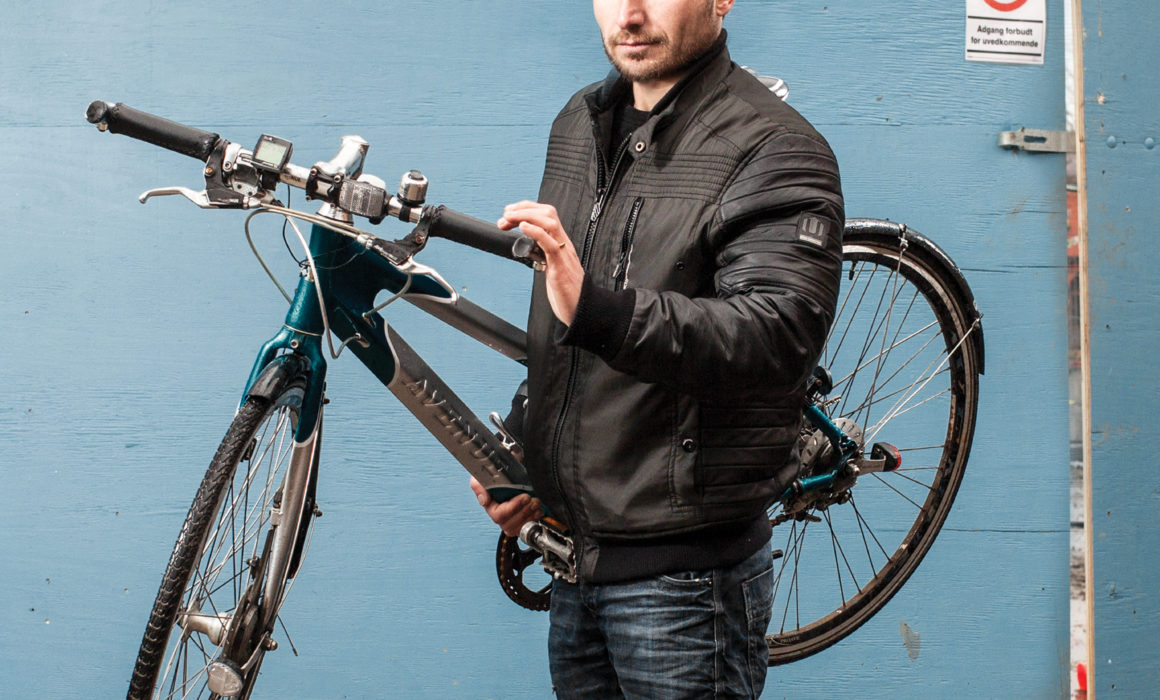
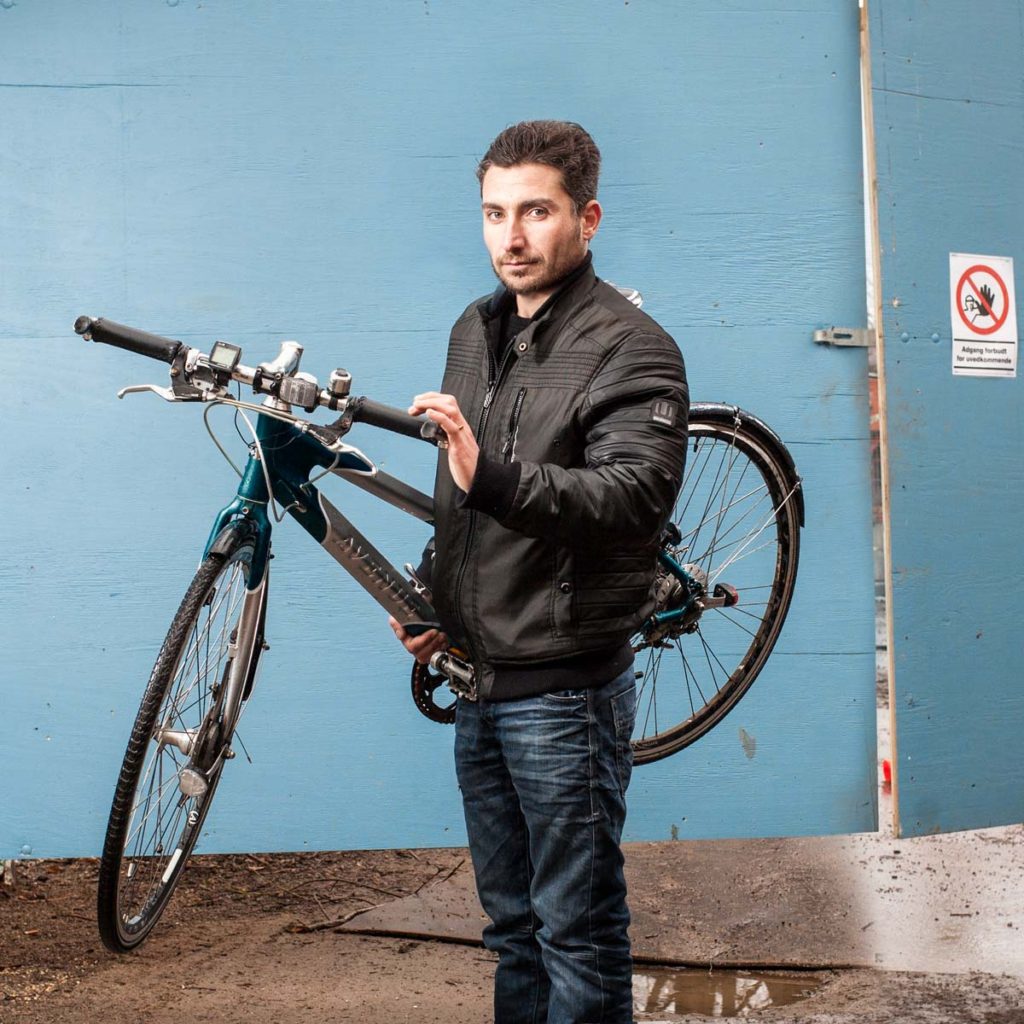
It was my job to repair the bikes in the house, and it felt nice to be able to contribute with something, to feel useful again. But it wasn’t till I met the woman who was to become my wife that I felt at home again. I miss my own family of course, but I am now starting my own.
Jandill Bshar / 27 years / male / couple / educated economist / craftsman / Gentofte / from Syria / kurdish background / came to Denmark in
2013 / residence permit in 2014